Understanding Dust & Allergies
Discover how dust forms in your home, identify common allergens, and understand how furniture choices impact your indoor environment.
How Dust Forms in Homes
Household dust is a complex mixture of particles that accumulates from various sources. Understanding its composition helps in making better furniture choices.
Outdoor Sources
Pollen, soil particles, and pollutants enter through windows, doors, and ventilation systems. These particles settle on surfaces and become part of household dust.
Indoor Sources
Dead skin cells, pet dander, fabric fibers, and food particles contribute significantly to dust accumulation. Furniture with textured surfaces can trap and hold these particles.
Common Dust Allergens
Several allergens commonly found in household dust can trigger reactions in sensitive individuals.
Dust Mites
Microscopic creatures that thrive in warm, humid environments. They feed on dead skin cells and are commonly found in bedding, upholstered furniture, and carpets.
Pollen
Plant pollen enters homes through open windows and doors. It can settle on furniture surfaces and become airborne when disturbed.
Pet Dander
Tiny flakes of skin shed by pets. These particles are lightweight and can remain airborne for extended periods, settling on furniture and other surfaces.
How Furniture Materials Affect Dust Accumulation
Different furniture materials have varying abilities to attract, trap, and release dust particles. Understanding these differences is crucial for creating a low-dust environment.

High Retention Surfaces
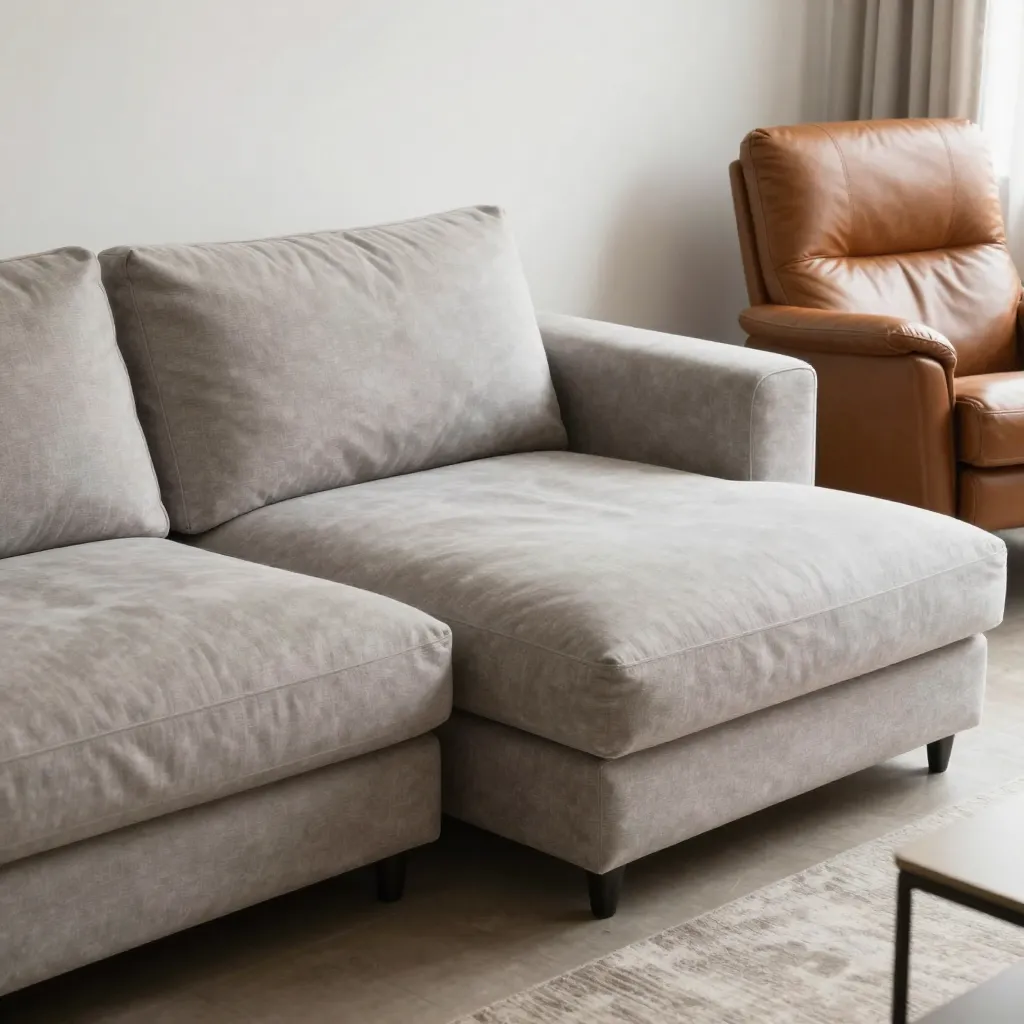
Textured fabrics, plush materials, and unfinished wood have microscopic spaces where dust particles become trapped. These surfaces require frequent cleaning and can continuously release particles into the air.
Low Retention Surfaces
Smooth, sealed surfaces like tempered glass, powder-coated metal, and sealed hardwood have minimal texture, making it difficult for dust to adhere. These materials are easier to clean and maintain.
Why Shape and Height Matter
Furniture design elements beyond material choice significantly impact dust management and cleaning effectiveness.
Raised Legs
Furniture with legs creates space underneath, allowing for easier floor cleaning and better air circulation. This prevents dust from accumulating in hard-to-reach areas.
Minimal Crevices
Furniture with smooth, continuous surfaces and minimal joints or gaps prevents dust from settling in corners and seams where it's difficult to remove.

Visual Comparison: High vs. Low Dust Retention
The following comparison illustrates how different surface types affect dust accumulation: